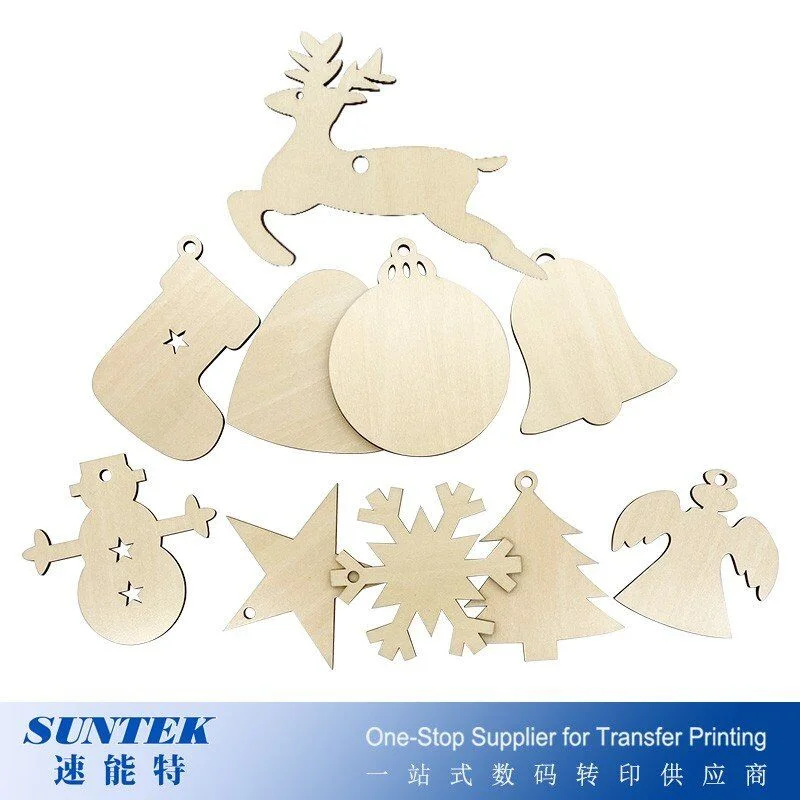
STB-T identifies MDF Christmas ornament blanks for seasonal decoration projects. Begin with the message or image the finished item is intended to carry, then develop it for the actual blank selected for the order. Keep this model reference attached to the artwork and the proposed supply description.
Choose the purpose of the design
A family-name ornament, a company greeting and a photo keepsake start from different priorities. For a family design, the name may be the main visual element. For a company greeting, the relationship between the mark and the seasonal wording may be more important.
For a photo keepsake, begin with the image details that must remain visible. A person close to an edge or a small date can influence the composition. Keep the original image available while developing the artwork so a proposed crop can be compared with the intended memory or message.
Build a simple visual hierarchy
Choose one main element before adding supporting words and decorative details. A short greeting and a name can be arranged so the reader recognises their order of importance. Keeping that hierarchy clear is more useful than filling every available part of a design.
Review the wording at the intended finished scale once the actual outline and artwork area have been established. Small lettering can look prominent on an enlarged preview. Keep the important text and image details inside the selected layout rather than treating a rectangular file as the shape of the physical ornament.
Organise a seasonal series
For a project with different names or pictures, connect every design reference to the correct wording and quantity. Keep a clear record of the version selected for each item. This helps separate an artwork revision from a change to the product order.
For a repeated company design, retain one controlled artwork file and its intended position. If the project later adds a personalised variation, give that variation its own reference. A consistent product model can sit alongside different graphic choices without the specifications becoming mixed between them.
Review the design on the proposed item
Compare a proof or buyer-side sample with the intended text, image placement and overall appearance. Check spelling and dates against the original brief. Keep the product reference with the artwork version being reviewed, so the decision concerns one defined design and blank.
Use the decoration instructions applicable to the actual item and chosen process. Keep any particular presentation requirement with the proposed supply description. A seasonal name alone does not establish the shape, physical dimensions or printable-face arrangement needed for a finished production layout.
Describe the order in one place
Include STB-T, quantity and delivery country with the artwork references and intended presentation. Add the outline, dimensions and printable-face requirements that need to be resolved for the selected item. Review the offered blank and any requested presentation as a complete description before placing an ornament order.
The Suntek STB-T listing identifies this product. Browse MDF & photo panel blanks for related items and use buying brief to organise the wider purchase.
Questions & answers
What product does STB-T identify?
It identifies MDF Christmas ornament blanks. Keep the model reference with the specific item and design being considered.
Which outline should be used for artwork?
Use the actual outline and printable area established for the selected blank. Do not infer a shape or dimension from the general Christmas-ornament name.
Can a name or photo project use this product reference?
Use STB-T to identify the blank in the enquiry, with the intended name, photo or message as the artwork brief. Resolve the actual layout and decoration requirements for the proposed item.